| |
|
click for a larger image |
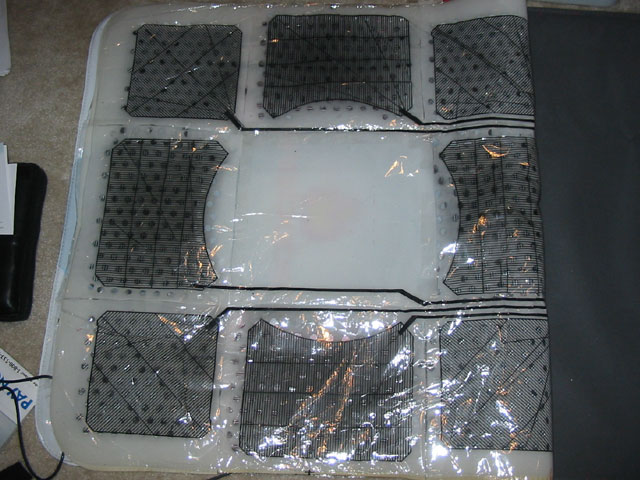
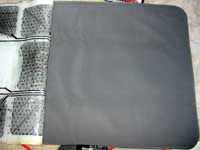
| 1. Rubber/plastic bottom layer - some use rubber to
reduce slipping of the pad during use. |
|
 |
|
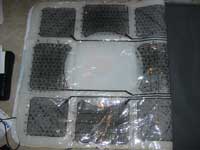
| 2. Printed circuit plastic sheet - containing an array
of oversize electrical circuitry that acts as the lower half of the
sensor. |
|
 |
|
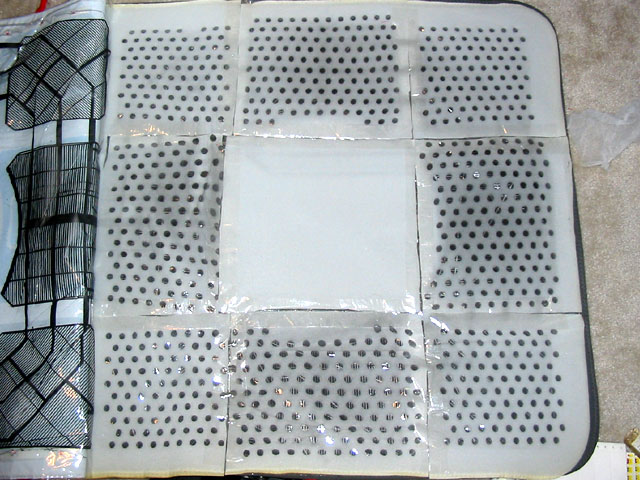
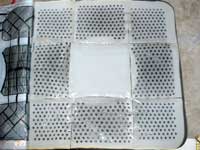
| 3. Foam layer - Cushion that separates the sensor layers
and pads the feet. |
|
 |
|
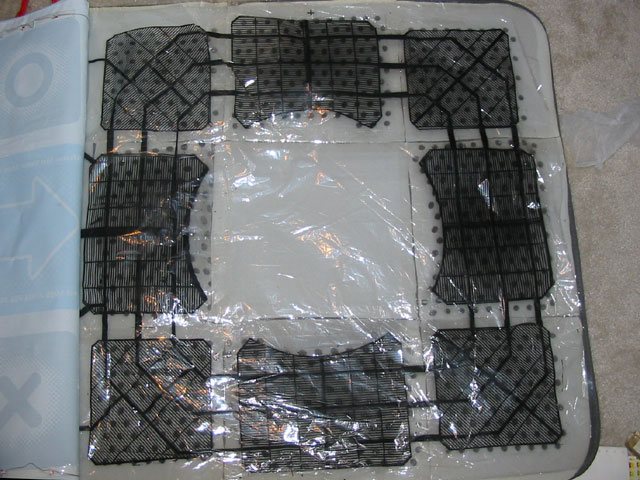
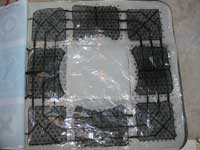
| 4. Printed circuit plastic sheet - contains the array
that acts as the upper half of the sensor. |
|
 |
|
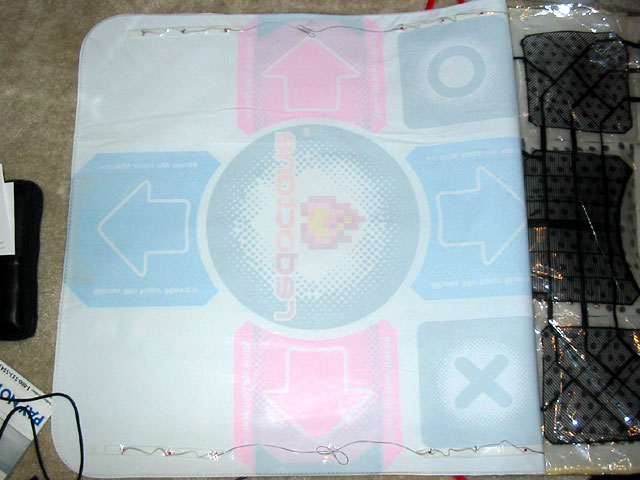
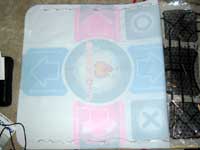
| 5. Vinyl printed layer - Top layer that is the surface
you dance on and has the button markings. This is the underside and
from here you can also see the LEDs attached that some pads have. |
|
 |
|
In case you're wondering how the pads work, the two
halves of the sensors basically form 10 capacitors (the four directions
and four buttons plus start and select). A capacitor is basically
two plates of electrically conductive material (usually metal). An
electric field can be held between these two plates based on the size
of the plates and their distance from each other. This concept is
called capacitance. When you step on a button, you compress the foam
inbetween the sensors and bring the two circuit layers closer together,
increasing their capacitance. The pad measures this change and when
it determines that you have stepped on it, a signal is sent to the
game console.
That's it for today's episode of Fil Tsai the Science Guy. |
|
|
| |
|
|